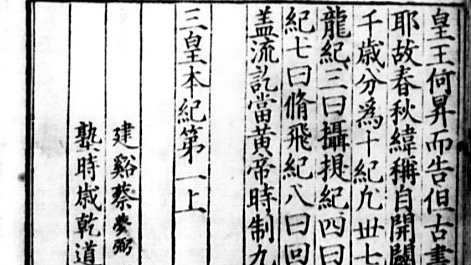
Records of the Grand Historian
Introduction
Records of the Grand Historian, also known as Shiji, is a monumental work of ancient Chinese history completed during Western Han Dynasty (206 BC-AD 24). Compiled by the historian Sima Qian, it is a foundational text of Chinese history and has since become a critical source for understanding the early narratives of China's past. The work is renowned for its detailed accounts of events, individuals, and the socio-political landscapes of various dynasties, extending from the legendary Yellow Emperor to the reign of Emperor Wu of Han.
Historical Context and Compilation
The Records of the Grand Historian was compiled during the early years of the Han Dynasty, a time characterized by efforts to unify the diverse cultural and historical traditions of China. Sima Qian, appointed as the Grand Historian in the Han court, undertook the ambitious task of documenting the history of China, drawing from an extensive range of sources, including governmental archives, personal letters, and oral traditions. His work is recognized not only for its historical significance but also for its literary merit, blending factual history with vivid storytelling.
Structure and Themes
The Records of the Grand Historian is organized into five sections: Annals, Tables, Treatises, Hereditary Houses, and Memoirs, each serving a distinct purpose in chronicling history. The Annals provide chronological accounts of events, while the Tables offer chronological charts of important figures and events. The Treatises discuss various topics, such as music, law, and economics, illustrating the complex tapestry of ancient Chinese society. Hereditary Houses document the history of ruling families, and Memoirs capture the lives and deeds of significant individuals.
Central themes in Records of the Grand Historian include the rise and fall of dynasties, the virtues and vices of rulers, and the complex interplay between fate and human agency. Sima Qian presents history not just as a series of events but as a narrative shaped by human actions and ethical considerations.
Impact and Legacy
The impact of Records of the Grand Historian on Chinese historiography and culture is profound. It established a template for historical writing in China, influencing subsequent works and historians, such as Ban Gu's Book of Han. Sima Qian's approach to historiography, emphasizing the moral and ethical dimensions of history, set a standard for the evaluation of historical figures and events.
The work's influence extends beyond history, impacting Chinese literature and philosophy. Its rich narratives and character studies have inspired countless adaptations in literature, drama, and film, perpetuating its legacy across generations. The Records of the Grand Historian remains a critical resource for understanding the cultural and historical heritage of ancient China, providing insights into the values, beliefs, and societal structures of the time.
Translation and Global Reception
The Records of the Grand Historian has been translated into numerous languages, with notable translations contributing to its global appreciation. Each translation brings new interpretations and perspectives, allowing diverse audiences to engage with Sima Qian's work. The translation process highlights the challenges of capturing the nuances of ancient Chinese language and thought while making the text accessible to modern readers.
Sinologists and historians worldwide have studied the Records of the Grand Historian for its unparalleled historical narratives and its reflections on the human condition. The work's universal themes resonate across cultures, making it an enduring classic in world literature and history. Photo Gallery(1 picture)CategoriesLiteratureTagChinese Classical LiteratureRelatedThree Sovereigns and Five EmperorsEmperor ShunXuan YuanEmperor Qinshihuang's MausoleumCatalogue1. Introduction2. Historical Context and Compilation3. Structure and Themes4. Impact and Legacy5. Translation and Global Reception- - - []








